But Nothing is Lost, second ascent
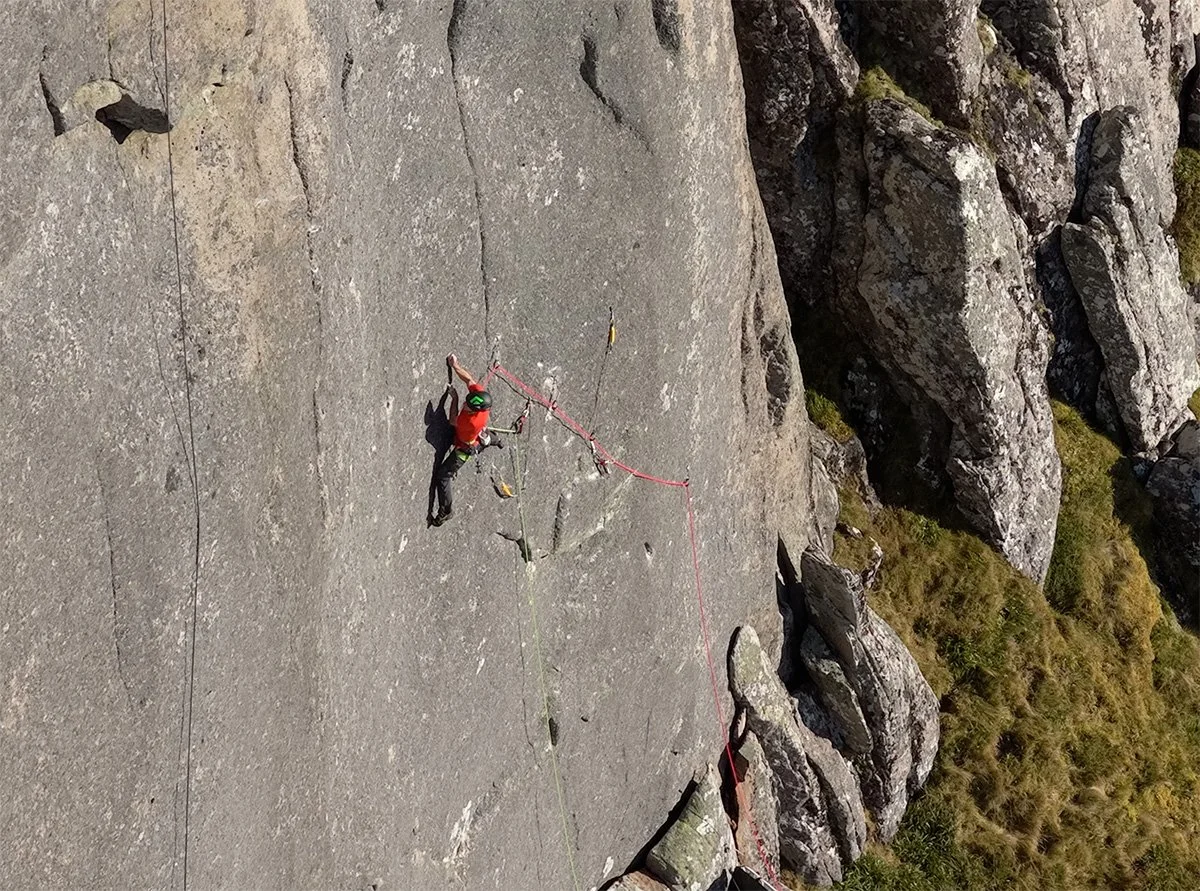
About to fall, after a cam placing epic.
I’ve spent pretty much my entire adult life trying and doing hard trad routes. My appetite for the combination of physical difficulty and real consequence if you fall is as strong as ever. This is not easy. As you inevitably accumulate battle scars of life: separated shoulders and broken ankles, there is the ever present threat of gaps in training that precipitate ageing. I like simple strategies for training, and defending my climbing form over decades has always been founded on having hard projects to provide inspiration. Real inspiration allows you to transcend the problems and realities of life. It helps you reframe those realities and improve despite the setbacks we all see at some point.
This is why I live in the highlands - it is full of hard and bold unclimbed lines, more than I’ll ever manage to climb. But I’m always on the lookout for other people’s hard trad routes to repeat. Repeating other’s routes is essential for several reasons. It forces you to deeply engage with the same struggles they had, and thus have the opportunity to really learn from their wisdom and experience. It keeps your grading from getting out of hand as well.
Over the years I’ve spent a lot of time travelling to repeat other’s routes. Johnny Dawes’ Indian Face, James Pearson’s Walk of Life, Dave Birkett’s ‘If Six Was Nine’ among many others. The big grade, the thrills and spills experienced by the first ascentionist and the quality of the routes themselves are all part of the appeal of going to try these climbs. The last time I was truly inspired to leap in the car and drive to England was when Neil Gresham did Lexicon in 2022. I know the effort he went to to get into the physical shape required to climb it. To move to the Lake District, with all its history of hard trad climbers, and pull off the hardest route in the Lakes at age 50 was a brilliant effort that I wanted to get a taste of, in my own small way.
That autumn, I made a few visits but ran out of time to get it led before winter arrived. I went to watch Alastair Lee’s ‘Brit Rock’ film of Neil’s adventure in the cinema with my daughter. When I popped up in the film, at the top of Lexicon when Neil arrived at the crag with Steve McClure, the whole cinema started laughing and my daughter was asking me what was so funny. It’s great that folk wouldn’t write me off for still being keen for routes like this. Yet it was uncomfortable, in a good way, for me to watch the film, since I hadn’t yet done it and just really wanted to.
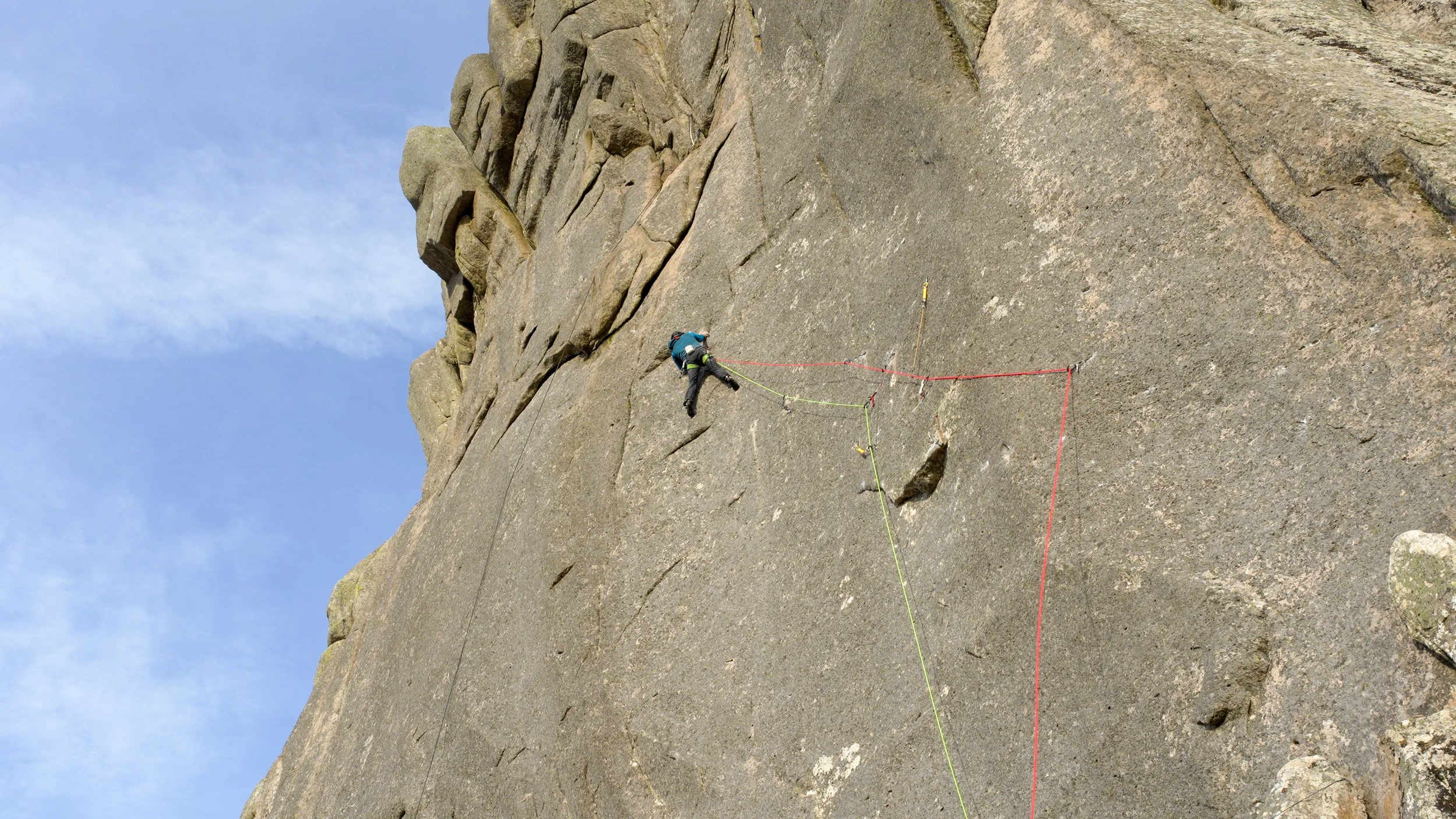
Tired feet that were not ready for this route.
In April I watched a news report of Franco Cookson’s ascent of But Nothing is Lost, E12 7a, on Ben Loyal. It had beautiful pictures of Franco matching monos at 45 feet with only a skyhook between him and the spiky boulders far below. I was inspired. To me, this was the most exciting route in the world of trad climbing for years, since it was not a crack. Not sport climbing on cams. A pristine mountain route that was incredibly bold and had tested Franco for four years of his life to see it through to the end. I’m sure as he was tying into lead ropes, he’d have been all too aware that the end could have been a grizzly ground fall. Instead, he pulled it off and survived to grade it E12; a huge number that implies a very big climbing experience.
My second thought was ‘that’s a route I’ll never climb’. I’d just been through two full years of no trad climbing. A sesamoid injury in my foot meant I just wasn’t able to stand on small footholds on walls and slabs without a lot of pain. I’d been limited to steep bouldering and sport, a first world problem I was coping with. Franco’s ascent gave me the kick to revisit my attempts to adapt my rock shoes to work around the injury and restart trad. For a first step, I went to Skye and repeated Robbie’s ‘Away with the Faeries’ E9 6c, to see if I still had a trad head. Then I forced myself just to drive to Ben Loyal, throw a rope down the E12 and touch the holds. On the first session, I did all the moves and pretty much there and then decided to fully commit to honouring Franco’s brilliant ascent by trying to repeat it.
It was easier for me since for once, this route was located in the highlands which is the main area for trad climbing in the UK. For repeats, I’m used to having to travel to some of the smaller and more remote mountain ranges. I could make day trips to Ben Loyal easily, although half of them were spent watching the rain by Loch Loyal while I sat on the laptop writing my course. I was even more inclined to make day trips after I tried camping below the route and picked up Lymes disease from a tick bite, just as Franco had also done. I was fortunate to quickly fall ill and thus get prompt treatment and no further problems.
The route was as good as it looked from the pictures. I’d known about it since 1998 when Rab Anderson had mentioned there was an E10 to be done on the crag. But there are just so many good crags to get round to. My first impression was that there were probably a few more runners to be had in the small pockets all over the wall. With a bit of filing, I managed to sculpt a couple of tiny tri-cams to fit mono pockets and could see that Franco had opted not to place a couple of bomber cams in larger slots, presumably because they add a lot of difficulty to place them. In particular, a blue Camalot in the ‘mono match’ pocket, if you could lock off and get it in, would render the rest of the pitch ‘not death’.
At the start of October, I also figured out a way to place a cam from below, where Franco reached down to place, after doing a bold move using the cam pocket for the right hand, and only a hook for protection. Not using the hold obviously made the climbing harder, bumping the grade up to about 8b to top rope, but took the edge off the boldness at a height where a ground fall would be game over.
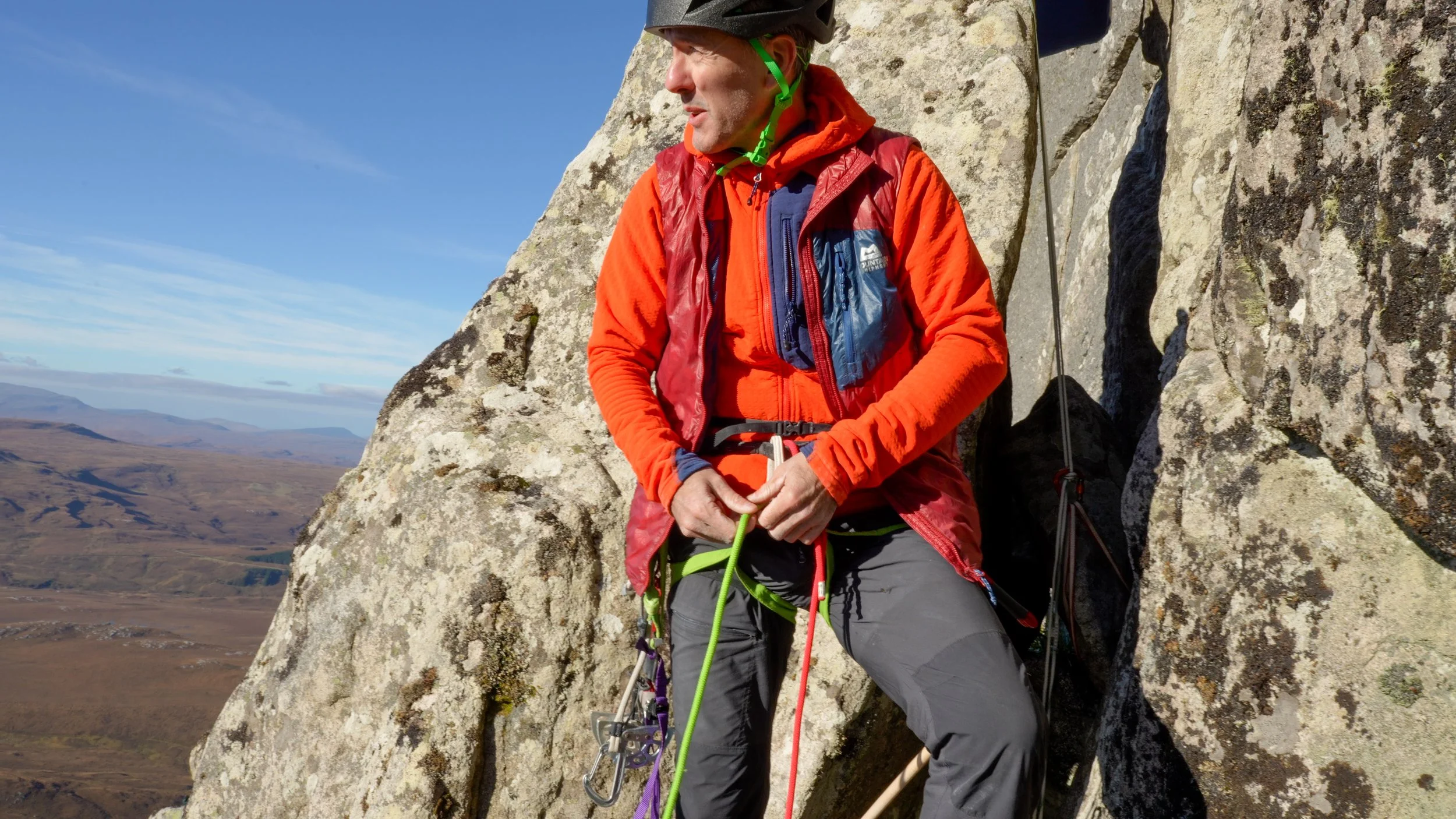
Tying in, even though I really knew the sun on the wall was too strong
Kev Shields offered to belay me which really encouraged me to consider a lead. But the weather had other ideas. It was too cold and I dry-fired off a mono while climbing back down from placing the good cam at the start. That was my one chance. But with the climate the way it is, another day with the freezing level just above the tops materialised a few days later.
This time Masa offered to hold my rope and we had warm sun on the wall. I felt stupid to be complaining about warm rock at the end of October on a mountain crag. My gut was telling me it was not the right day, but maybe I could just muscle through it. Much needed friction was absent on the lower half of the pitch, but nonetheless I scrapped my way through it pretty well, with just the odd wobble on warm crimps.
At the mono match, I went from ‘I’m doing this right now’ to ‘Oh shit I’m going to hit the ground’ within a couple of moves. The rock was too warm, I was burning too much power to stay on, and it caught up with me while trying to reach back and place the blue cam in the mono-match pocket. My feet, still too weak after injury for a route like this, had numbed out and the right foot just wouldn’t bite on the critical foothold. I was basically one-arming the two finger pocket and by the time I’d got the cam off my harness, both feet were coming off. I got the cam half in, frantically rearranged my feet, and repeated the same wobbly fiasco trying to clip it. The right foot slipped one nano second after I got the cam clipped, but saved it with an equally rapid pinch grab of the left edge of the pocket.
After improvising a new position to relieve my melting left arm, I spotted that the cam was still only half-in and crossed under to shove into the back of the pocket and finally ensure that I was only going to fail on the attempt and not at surviving the day. With that, composure was restored, but forearm power was not and I could only stare at the hard last move and then slump onto the cam in bitter disappointment.
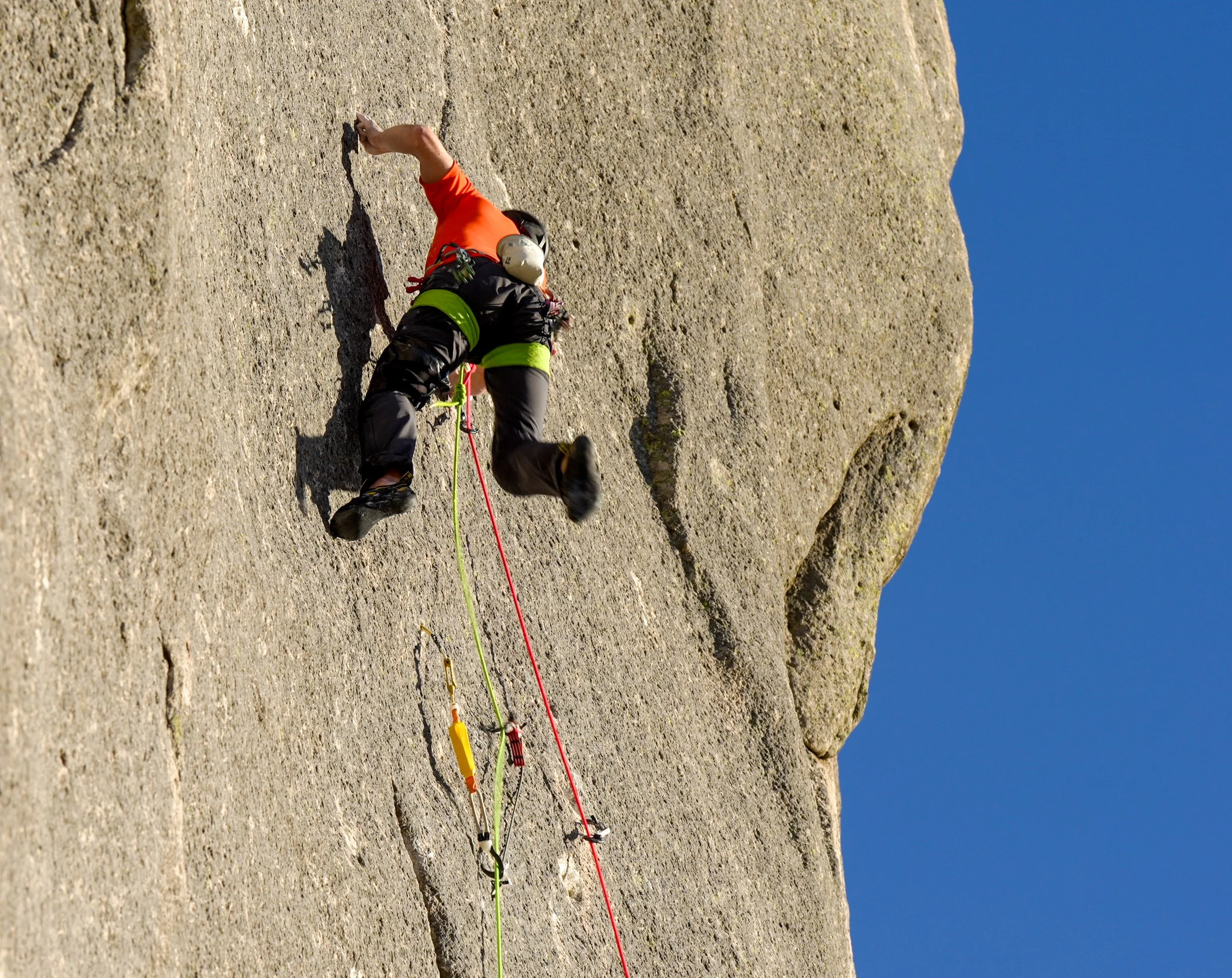
What a time to test whether you can one-arm lock a two finger pocket.
It just wasn’t the right day. It’s not a route to climb in full sun and I needed more time to strengthen my feet after two years of no trad. How about one week more?
I’d been so disappointed that I didn’t actually climb for the next week. I also had an imminent speaking tour to prepare for. I should have just not looked at weather forecasts, but another dry day with warmer winds emerged and Julian Lines offered to come up and hold my rope, even though I stressed that I’d not make another attempt in poor conditions and risk a serious accident. Conditions at the crag were just middling - neither good nor awful, the hardest for decision making. Just because you could do something definitely doesn’t mean you should.
Going through the motions of placing the initial gear and warming up would hopefully provide a clear excuse not to go for it. But it didn’t work out that way. The sun was weak and milky, the wind wasn’t too cold and I just felt too awkward about chickening out for no apparent reason other than being scared of the lead. So I ran out of time to delay and just started up it. I’m a lot better at this than I was in younger years. When the excuses run out, either start climbing or pack up and go home. Your choice.
The technical crux traversing to the overlap didn’t feel as effortless as in good conditions, but it still felt good. The bold stretch off the undercuts was the same - neither perfect but not a mess either. So I arrived at the stopping place still without an excuse to lower off a skyhook. Commitment it is then!
On the previous attempt, I first knew things were going awry at the mono match, but this time it felt really good. All I needed was to get that blue cam in, and regardless of what happens next, I’d be going home safe today. But once again the right foot numbed out and refused to stick to the key foothold. By the time I was aiming the cam towards the pocket, both feet slipped and I went onto one arm on the two finger pocket. My rotator cuff was not ready for my emergency 1RM and can still barely lift a kettle a week later.
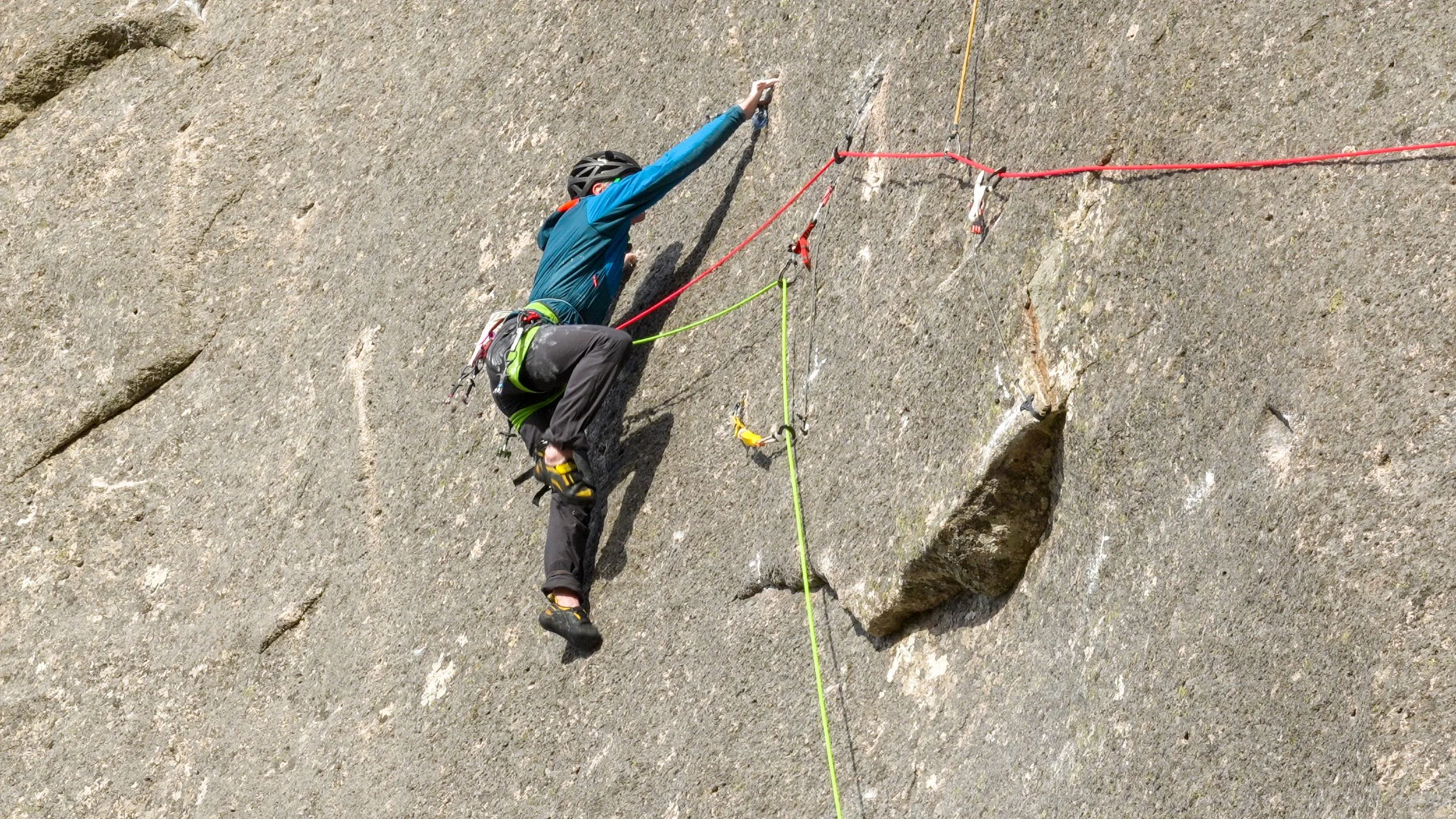
Another rep of foot off two finger campusing with a cam in one hand. Not exactly textbook.
I didn’t really know what to do next. I grabbed the cam slot with my right hand and got myself established again. But the cam was still in my hand and not in the rock. The same thing was bound to happen if I tried again. Since adrenaline had seemingly bumped my dead hang strength a good notch, I opted for right foot only and took the left foot off - much more powerful but at least in balance with my weight more over the key foothold. This time the cam went in and I still had enough in the tank to make the big cross though and land at the porthole pocket out left.
It’s E7 6b from there. But now the power-burn from my gear placing epic hit me. My arms were pumped, but my feet were much worse - completely numbed out and it reminded me of the same situation on The Golden Road when I almost took at 80 footer from E5 6a terrain at the end of the pitch because my feet were done in, and arms eventually failed to make up the difference.
At the next shakeout I faffed about taking my kneepad off, telling myself it was a bit restrictive on a high step just above. The real reason was to distract myself and make the seven minute eternity on this rest go by quicker. The high step, and the undercuts section beyond all went fine. I felt I had it in hand again, but numb feet returned again right at the end and I almost blew it on a 5c move right below the big flake.
At the flake I made my excuses to Jules for sketching about and raced to the belay to pull the ropes through and lead the big off-width to the summit.
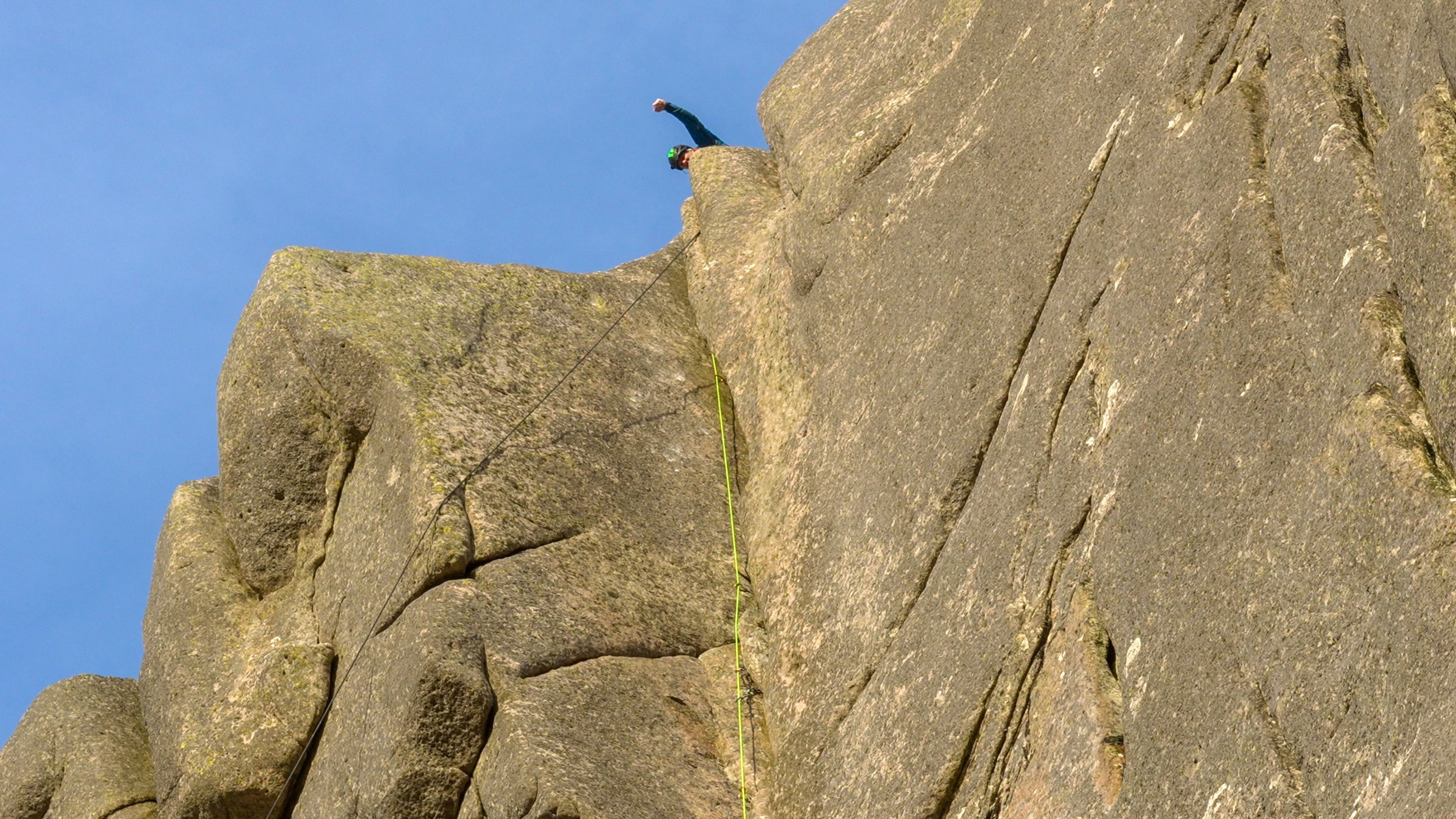
The top. How did I get here in one piece?
Franco has opened a fabulous new route here that was very satisfying to repeat. I’m so glad that there are people active in bold trad climbing and not just safe cracks. I’ve heard that the film of Franco’s ascent is brilliant, and I’m looking forward to watching it in the cinema with my daughter.
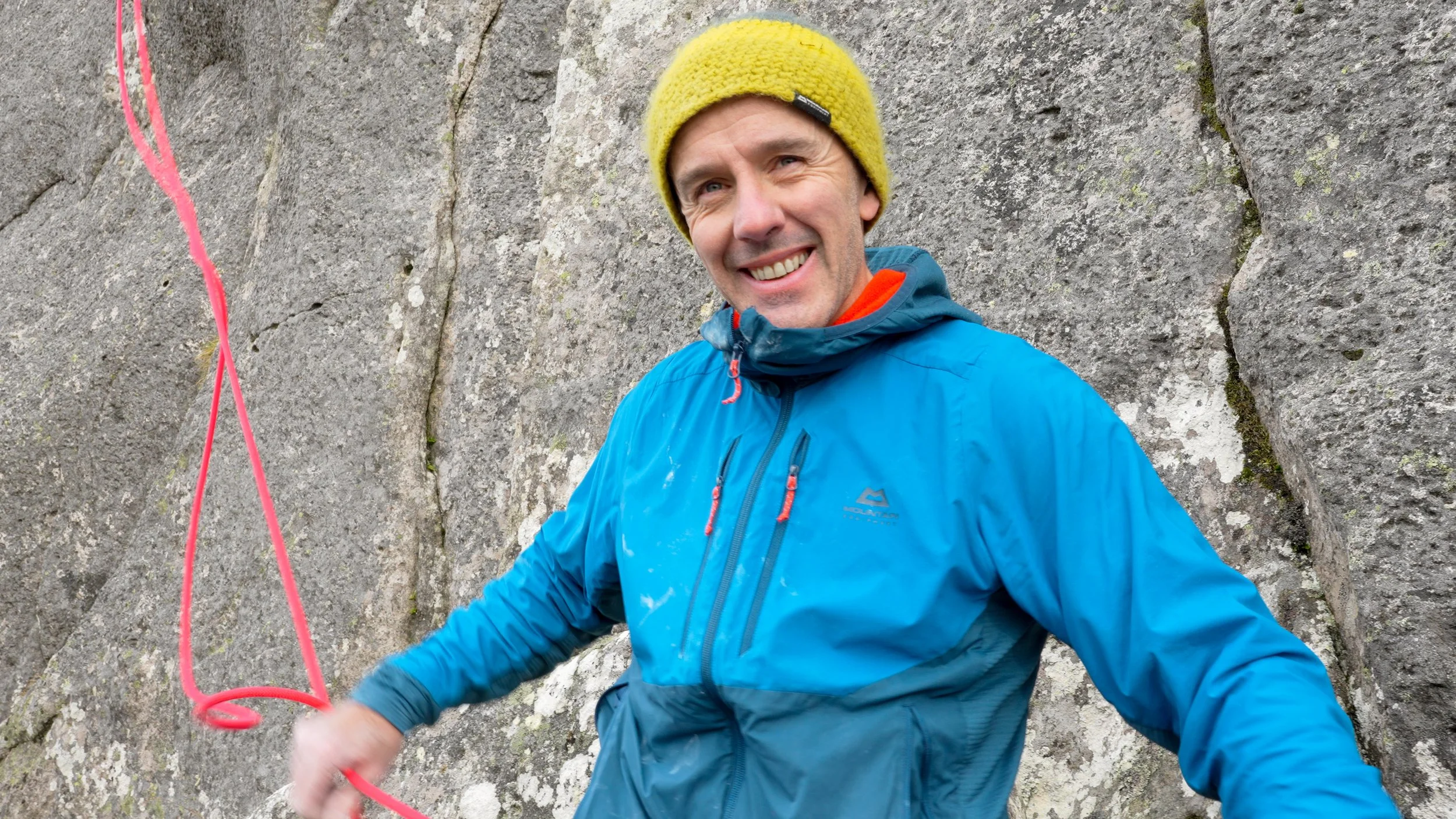
E12?
Putting out a new grade takes a great deal of confidence and/or conviction. E12 implies a level of climbing significantly higher than anything we’ve seen before in UK trad climbing. I had my heart in my mouth when I suggested the first E11. That was twenty years ago and I still don’t know if my call was justified.
I don’t think I had masses of confidence, but I did have at least a degree of conviction, which came purely from repeating lots of other hard routes. There were three E10s and I repeated two of them very quickly, and then the third shortly afterwards. Grading is totally subjective, messy and highly prone to bias. People don’t even agree on the basics of how to go about it. When giving Rhapsody E11 I felt I had done a lot of work to gather the best of the incomplete information available to help me decide. There was no firm concept of E10, but I at least knew it was a step harder than the routes that had been done. That was the best I could do at the time and would not feel regret if Rhapsody were subsequently upgraded or downgraded.
My feeling is that But Nothing is Lost is E10 6c, maybe making it into the top five hardest routes in Scotland and definitely the hardest in Caithness and Sutherland.
It is of course possible that harder trad routes than BNIL, like Echo Wall, Mind Riot, Rhapsody, Seven of Nine and possibly others I haven’t done (I try not to comment on grades of routes I haven’t done) should be upgraded. I’m sure discussing that will make good pub and forum chat. You’ll get some wild opinions in all directions from folk who haven’t done any of these routes, and you’ll get closest to some good sense from people who have actually done them.
I’m acutely aware that I’m quite a soft grader compared to some of my peers who do hard mountain trad routes in Scotland, and so it’s possible some more of my routes will see a downgrade yet. Meanwhile, I’ve been told by other folk (who haven’t repeated any hard routes in Scotland) that I’m a harsh grader. I doubt that will change and I don’t mind whether folk pay any attention to my view or not. The routes just are what they are.
I’ve seen an argument that ‘other routes are given big grades, therefore let’s just run with the grade inflation’. My view is the opposite. I downgraded The Walk of Life from E12 to E9 in 2008. If that grade had stuck, things would have got really out of whack. I don’t always make a point of offering grade opinion on routes I climb, but when such a huge and unprecedented grade is offered, I think it is important to register a view this time.
For what it’s worth, But Nothing is Lost feels around 8b to me, and although poorly protected, there are only short sections where you really mustn’t fall. The nature of the climbing is reasonably positive with pockets for handholds and I think a good slab climber with strong feet would get on a lot better than me on the footholds.
Overall, BNIL is a bit harder than The Golden Road, which is similar in length, angle and physical difficulty, but that route is safer. BNIL is one E grade harder than the Walk of Life or The Indian Face, but significantly easier than Echo Wall, Mind Riot or even one or two E9s like Seven of Nine or Present Tense. Taking all that into account, E9 6c could be a bit harsh for But Nothing is Lost, but it’s just not hard enough to be E11. That’s my view, for climbers to weigh or ignore as they wish.
One thing I hope will register with the climbing community is my deep respect for Franco’s effort to travel the length of the country, commit himself to such a hard, bold route and finish it. It’s a route to be proud of and I really hope it becomes a popular testpiece in the same way Rhapsody seems to have in recent years. I dare say some of the climbers who would do Rhapsody would not lead But Nothing is Lost. But it’s possible that bold climbing will come back into fashion again and for those who are keen to exercise mind control on hard trad, I recommend you put But Nothing is Lost near the top of your hit list.
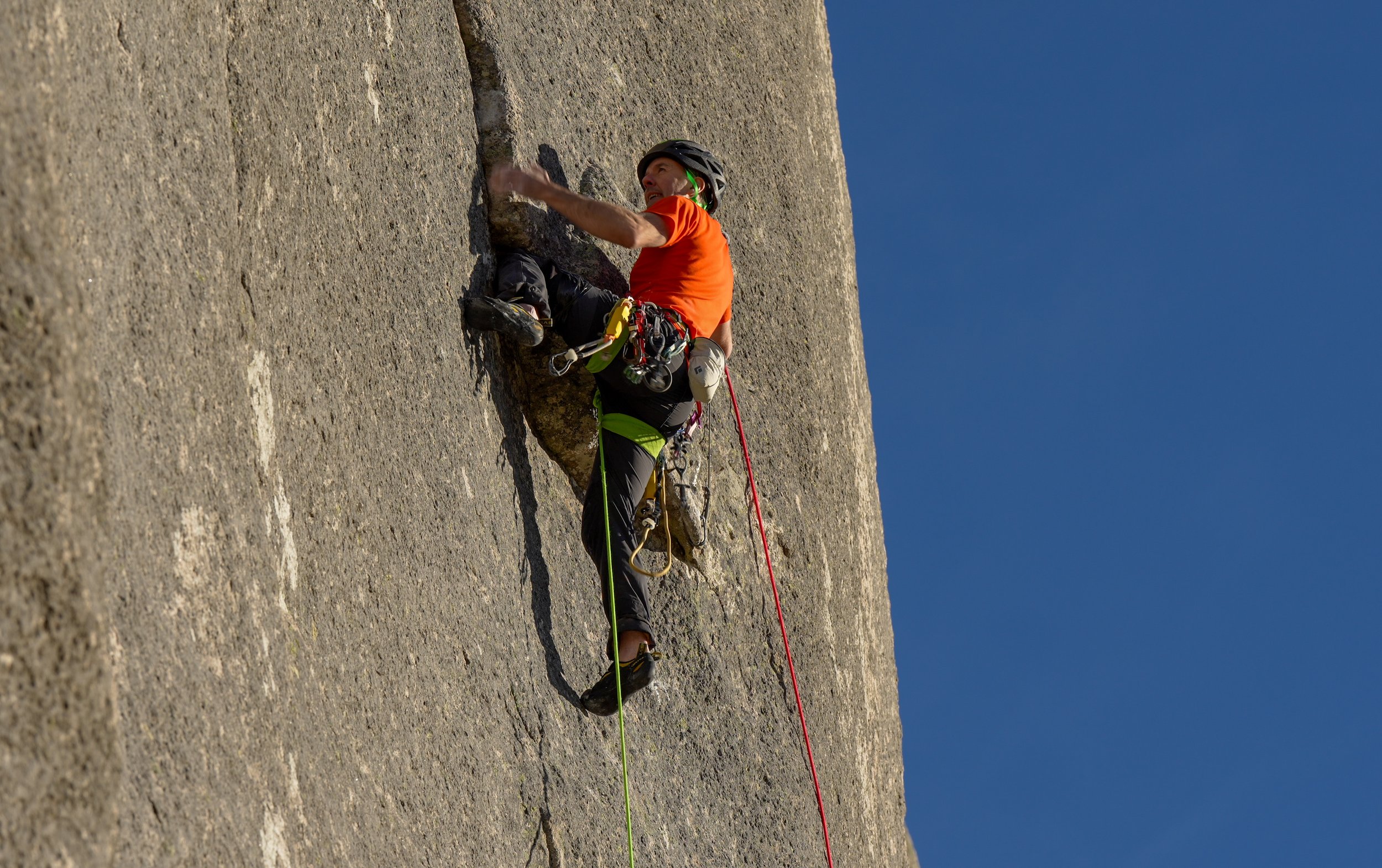
But Nothing is Lost E10 6c. A very very hard trad route.